
How to Know When Your Sports Court Needs Resurfacing in Colorado
Catching surface problems early is the difference between a $6,000 resurfacing job and a $40,000 reconstruction. Here is what to look for.
Most court owners do not notice wear until it is bad. That is understandable because deterioration is slow, and courts do not send alerts. But Colorado's climate is genuinely hard on outdoor surfaces. High-altitude UV, hard winters, and the freeze-thaw cycles Denver gets every spring quietly destroy acrylic coatings from the inside out. By the time a court looks rough, the damage is usually deeper than it appears.
If you have a tennis court, basketball court, or multi-use surface on your property, read this before your next season.
What Is Sports Court Resurfacing?
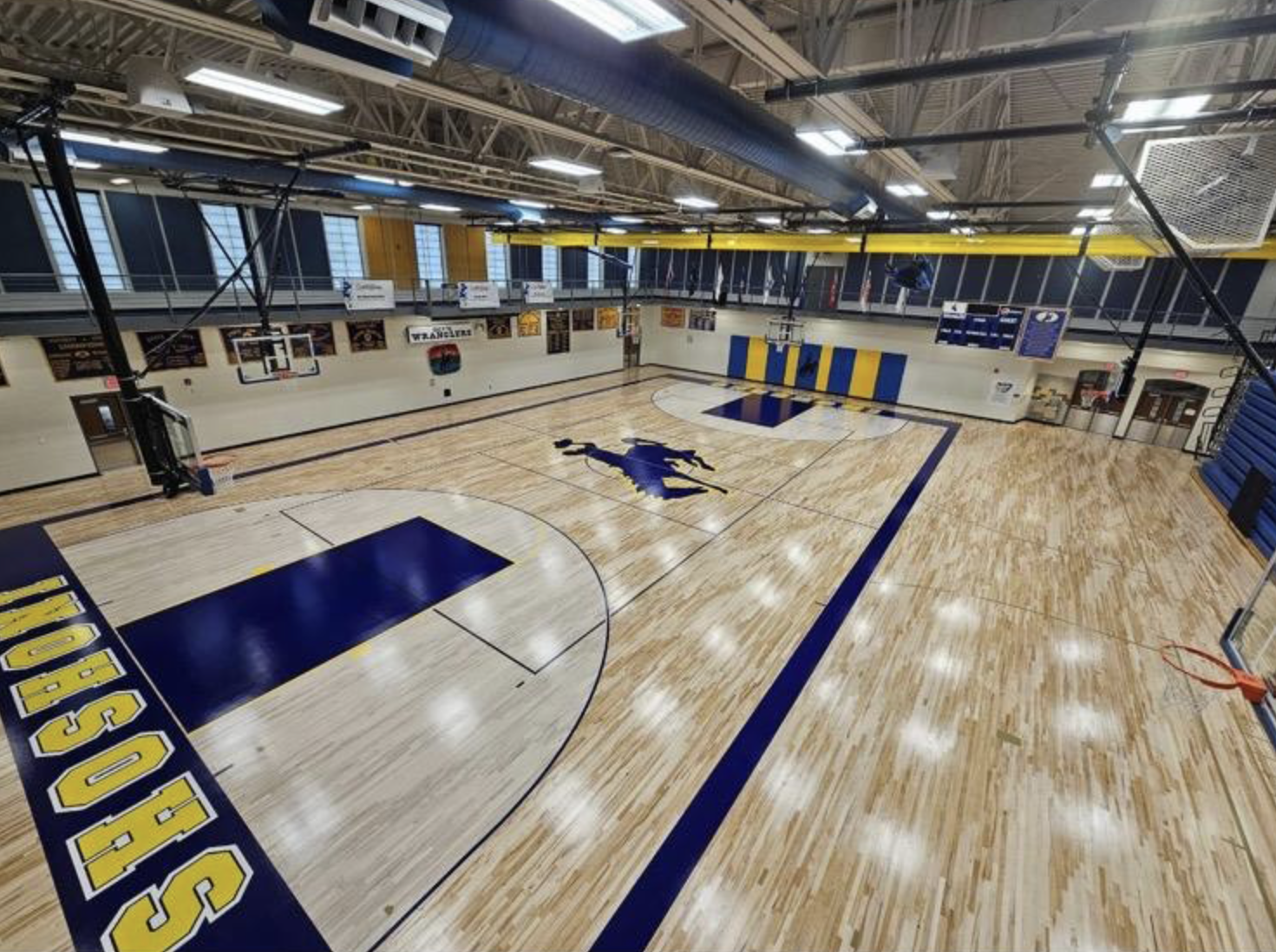
Resurfacing means repairing the existing surface by filling cracks, leveling low spots, applying fresh acrylic coats, and repainting all the lines without touching the base underneath. When the sub-base is still solid, resurfacing is all you need. Done right, it adds eight to ten years of life to a court.
The confusion comes when people assume a bad-looking court automatically needs full reconstruction. Often it does not. Resurfacing is the right call far more often than people think, and it is a fraction of the cost.
That said, if the base has shifted, settled, or been saturated by years of standing water, resurfacing over a compromised foundation is a waste of money. That is when full court reconstruction becomes the conversation. A professional assessment tells you which situation you are actually in.
Warning Sign #1: Cracks in the Court Surface
Not every crack is a crisis, but every crack eventually becomes one if you ignore it.
Hairline cracks are shallow fractures in the acrylic layer. They look minor and, early on, they are. The problem is what happens next. Water gets in. Colorado freezes. That water expands, the crack widens, and by spring it is twice the size it was in October. This cycle repeats every single year.
Structural cracks are a different animal. These are wider, deeper, and often show up in that spiderweb or alligator pattern you have probably seen on old courts. They mean the sub-base underneath is moving or failing. A patch will not hold. You need a real assessment.
The rule of thumb: any crack wider than a quarter inch, any crack that has come back after being repaired before, or any crack that is spreading across a significant portion of the court needs professional attention. Tennis court repair in Denver is the kind of thing that is cheap early and expensive later.
Worth doing: Walk your court after the first hard freeze of spring. That is when cracks show up. Find them now, before the season starts.
Warning Sign #2: Fading Color and Worn Line Markings
A faded court is not just an eyesore. The acrylic coating that provides color is also doing a lot of other work: sealing out moisture, blocking UV from hitting the base, and giving players the consistent surface grip they are used to. When it wears out, all of that goes at once.
You will notice it as uneven color first. Bleached-out patches, areas where the surface looks bare, lines that are hard to see from across the court. At that point the coating is not protecting anything. UV is hitting the base directly. Moisture is getting in. The surface texture is changing underfoot.
For anyone using the court competitively, faded lines are a real problem. Boundary disputes mid-game, players unsure of calls, coaches who cannot clearly mark positions during drills. It sounds small until it is your court.
Court resurfacing in Colorado restores the color, recoats the whole surface, and puts down crisp new lines. Courts that come back from a good resurfacing look brand new and play like it.
Warning Sign #3: Standing Water and Drainage Problems
Courts are built with a slight slope, usually around 1%, so water runs off and does not sit. If you are seeing puddles that stick around a full day after rain, that slope has either shifted or degraded. Neither is a small problem.
Standing water on a court does a few things, none of them good. Players slip. Water works its way into every crack and seam in the surface. In Colorado that water freezes, expands, and destroys a little more of the court every winter. Add in mold and algae growing in the low spots and you have a surface that is slippery even after it dries.
Basketball court resurfacing projects deal with drainage issues constantly. The good news is that when the cause is surface-level slope loss rather than base failure, it can usually be corrected as part of resurfacing through re-leveling and slope restoration. But you have to address it. Courts that drain poorly age at two or three times the rate of courts that drain correctly.
Warning Sign #4: Uneven or Inconsistent Surface Texture
This one is subtle but players notice it immediately. Drop a ball in different spots. Watch the bounce. Walk the court and feel whether the surface changes underfoot. If there are sections that feel rougher, slicker, or just different from the rest of the court, the acrylic coating has worn unevenly.
Texture inconsistency is a safety issue before it is a performance issue. Players change direction at full speed on these surfaces. A slick patch in the wrong place sends someone to the ground. On the performance side, unpredictable ball bounce is genuinely frustrating. It makes the court unreliable and discourages use.
If you are hearing from players that "something feels off," or you can see clear differences in how sections of the court look, that is the surface telling you it is ready for a new coat.
Warning Sign #5: Bubbling or Delamination
Bubbles or raised sections in the surface, where the coating has started to lift away from the layer beneath it, are called delamination. It usually comes from one of two things: moisture trapped between layers, or a previous resurfacing job that was applied over a dirty or unprepared surface.
Either way, it spreads. Delaminated sections do not hold themselves together. The edges keep lifting, water keeps getting in, and the affected area grows. Any raised section on a court is a tripping hazard, especially for older players or kids who are not expecting the surface to change.
Small bubbles in an isolated spot can sometimes be repaired. But when you are seeing it across multiple areas, the surface layer needs to come off and be redone properly. A DIY fix almost always makes things worse. An improperly patched delamination fails faster the second time.
Warning Sign #6: Your Court Is Over 5 to 8 Years Old
This one does not require you to see anything wrong. Age is a warning sign on its own.
Under normal use, acrylic sports court surfaces in Colorado typically need resurfacing every five to eight years. The range depends on how heavily the court gets used, how much sun it sees, and how well it was maintained. An HOA court getting pounded by dozens of residents is going to fall on the short end. A private backyard court used a few times a week might stretch toward eight years or beyond.
If you genuinely do not know when the court was last resurfaced, get it inspected. An experienced contractor can look at the coating condition and give you a realistic read on where it stands and how much longer it will hold. That conversation costs nothing and gives you real information to plan around rather than guessing.
Why Colorado Is Especially Hard on Courts
Courts in Colorado wear out faster than courts in most other states. That is not a scare tactic. It is just the physics of the environment here.
UV at altitude hits harder. The thinner atmosphere at Denver's elevation filters out less UV radiation than you would get at sea level. Acrylic coatings that might last eight years in a lower-elevation state often start showing UV-related brittleness and fading here in five.
Freeze-thaw cycles do real structural damage. The Front Range gets dozens of these every winter. Any water that has made it into a surface crack expands when it freezes and contracts when it thaws. Over hundreds of cycles across a few seasons, that mechanical stress cracks and loosens everything it touches.
Temperature swings are extreme. A 50-degree swing between morning and afternoon is not unusual in Colorado spring or fall. That constant thermal expansion and contraction stresses the surface coating and the bond between layers over time.
Spring snowmelt saturates everything. Courts that have any surface compromise when April and May arrive take on a lot of moisture fast. The combination of heavy snowmelt and freeze-thaw cycles in the same season is particularly destructive.
All of this means the resurfacing schedules you will find in national guides do not really apply here. Colorado courts need more frequent attention, and they need contractors who have actually worked in this climate and know what to look for.
Resurfacing vs. Full Reconstruction: How to Tell the Difference
The question we get asked most often is whether a court needs resurfacing or a full do-over. Here is a straightforward breakdown.
Resurfacing makes sense when:
The sub-base has not shifted or settled significantly
Cracks can be filled and held, and have not returned after previous repairs
The drainage slope is still basically functional
The court has seen reasonable maintenance over its life
Reconstruction may be needed when:
Large sections of the base have heaved or separated
Structural cracks have returned after being repaired more than once
Drainage failure is coming from the base, not the surface
The court is decades old with no maintenance history
A professional inspection is the only way to know for sure. We have seen courts that looked terrible but only needed resurfacing, and courts that looked acceptable but had base problems that made resurfacing a temporary fix at best. See our full range of court services for details on both options.
What Does Court Resurfacing Cost in Colorado?
Costs vary based on court size, how much crack and drainage repair is needed going in, the number of acrylic coats applied, and whether you are changing colors or repainting new line configurations.
For most residential tennis court resurfacing projects in the Denver metro area, you are looking at roughly $4,000 to $10,000. Basketball courts and smaller multi-use surfaces typically run less. Courts with significant damage going in land toward the top of that range.
Full reconstruction starts around $25,000 to $50,000 and goes up from there depending on court type and site complexity.
The thing worth understanding about cost is that waiting makes it more expensive, not less. Surface damage compounds every season. A court that needs $6,000 of work today may need $15,000 or $20,000 of work in three years if the base gets involved. Early resurfacing is consistently cheaper than deferred resurfacing. Read our full breakdown on the MAC Surfaces blog.
Get a Free Court Assessment in Denver and the Front Range
If anything in this post sounded familiar, whether it is cracks you have been meaning to deal with, fading you have been putting off, or drainage that has always been a little off, it is worth having someone take a look before another Colorado winter works on it.
We work with homeowners, HOAs, schools, and commercial facilities throughout Denver, Parker, Castle Rock, Colorado Springs, Boulder, and the broader Front Range. We will walk the court with you, tell you honestly what we see, and give you a clear estimate with no upselling and no pressure to do more than the court actually needs.
Contact our team today to schedule your free court assessment and find out what it will take to bring your surface back to peak playing condition.
